
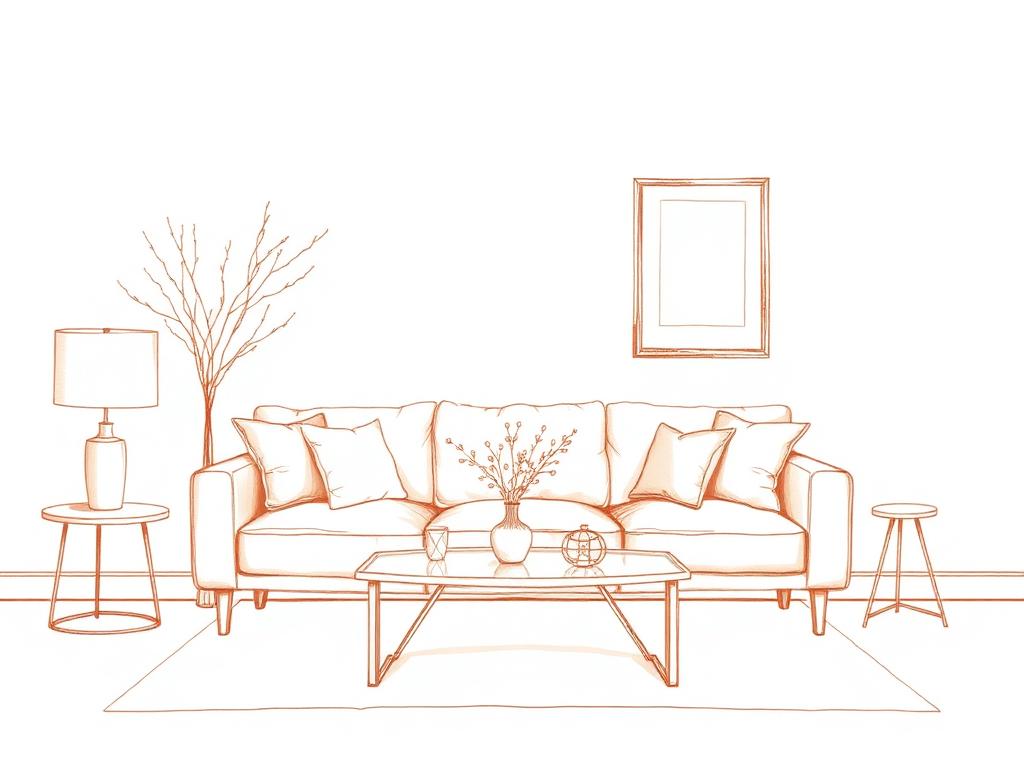
Most advice on how to stage a house for sale assumes you've already moved out. In reality, the vast majority of sellers are still living in the home — sleeping in the primary bedroom, cooking in the kitchen, parking in the garage — right up until the day the moving truck shows up. Occupied home staging is the discipline of making a lived-in home photograph and show beautifully without pretending nobody lives there.
Here's the approach I use with sellers across South Florida, in the order I'd tackle it on a Saturday morning.
Start with subtraction, not shopping. Walk every room with a pad and write down what leaves, not what you'll buy. Roughly a third of the furniture, half the surface decor, and almost all the personal photos come out. The goal isn't an empty house — it's a home where a buyer can picture themselves, not a home where they're meeting your family.
Fix traffic flow before you fix style. Buyers form an opinion in the first ten feet of every room. If they have to step around a chair to see the window, the room reads small. Pull seating off the walls, open up sightlines to the best feature in each room, and make sure every doorway swings into open space — not into a piece of furniture.
Stage the closets, pantry, and laundry. This is where occupied staging diverges most from vacant staging. Buyers open closets. They open the pantry. They look at the laundry. An organized closet quietly tells a buyer the house has enough storage, even when square footage is tight. A chaotic one tells them the opposite, no matter how many cubic feet are technically there.
Edit the kitchen counters to three things. Coffee setup, a cutting board, a bowl of citrus. Everything else — toaster, blender, knife block, paper towel holder, mail — goes into a cabinet or a bin you stash before showings. Counters read as space, and space sells.
Light every room warm. Swap any cool-white bulbs for 2700K to 3000K, turn on every lamp before a showing, and open every blind. Photos shot at noon with all the lights on look bigger and more inviting than photos shot in shadow with overhead light only.
Build a 'showing kit.' A laundry basket, a few zip-top bags, and a tote in the trunk of the car. When the agent calls, you have ten minutes to clear counters, hide chargers, make beds, and sweep loose stuff into the basket. The basket goes in the trunk. The house looks staged. You go get coffee.
Finally, decide what you'll DIY and what you'll outsource. Most sellers can handle subtraction, kitchen counters, and the showing kit themselves. Furniture rearrangement, paint and accessory guidance, and closet systems are where a few hours of professional help usually pays for itself many times over in the final sale price.
If you're staging an occupied home in South Florida and want a written plan you can actually execute — call 954-531-8550 or send a few photos through the contact page. Most projects start with a short consultation.